
NYC Rental Market: How Seasonal Rent Trends Affect Tenants and Landlords
NYC rental market seasonal rent trends can help tenants find better rental opportunities and help landlords optimize their rental income. In New York City, rental prices often vary between the busy summer season and the quieter winter months. Understanding these seasonal changes can help renters plan smarter lease dates and help property owners make informed real estate investment decisions.
June vs. November: Understanding NYC Rental Trends
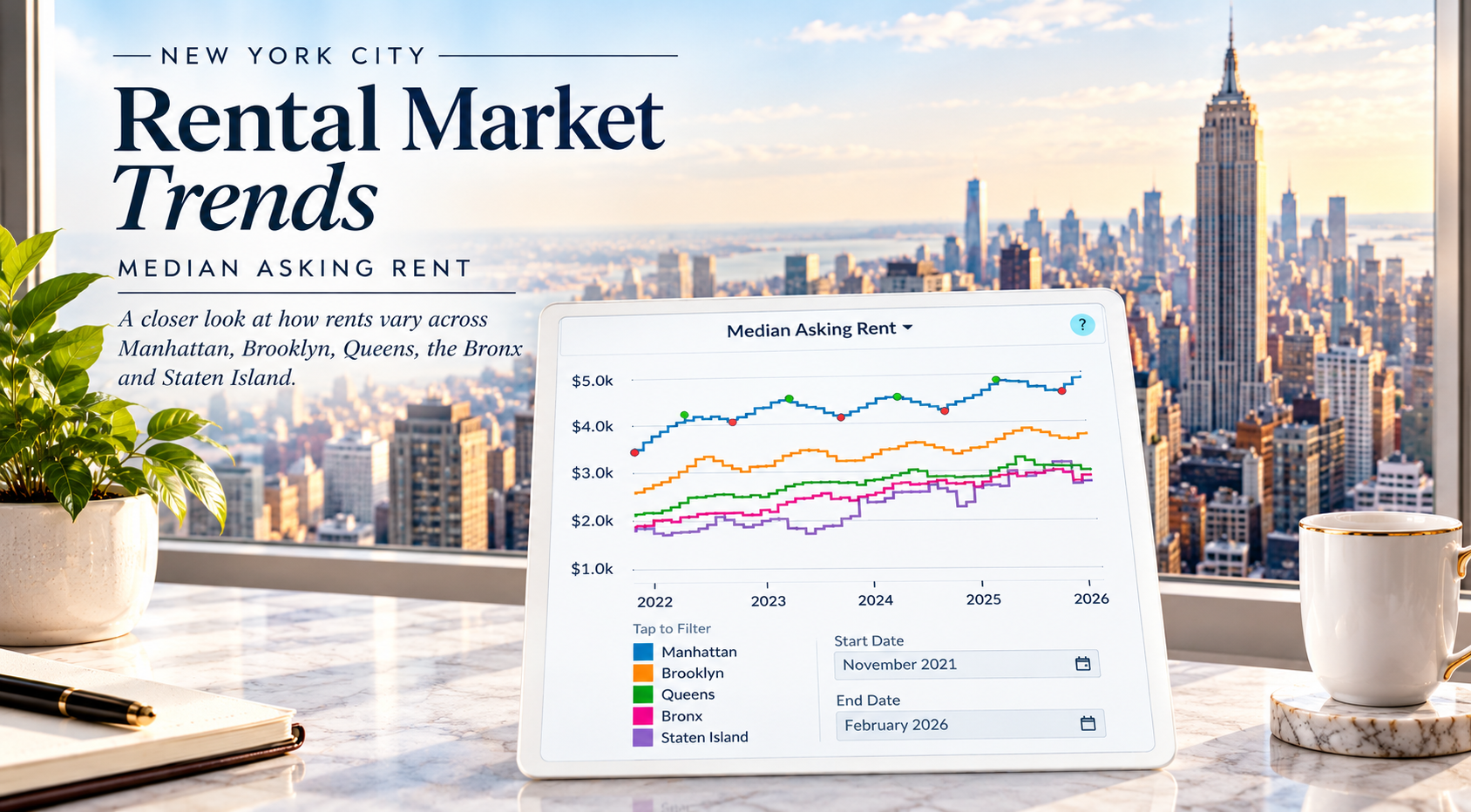
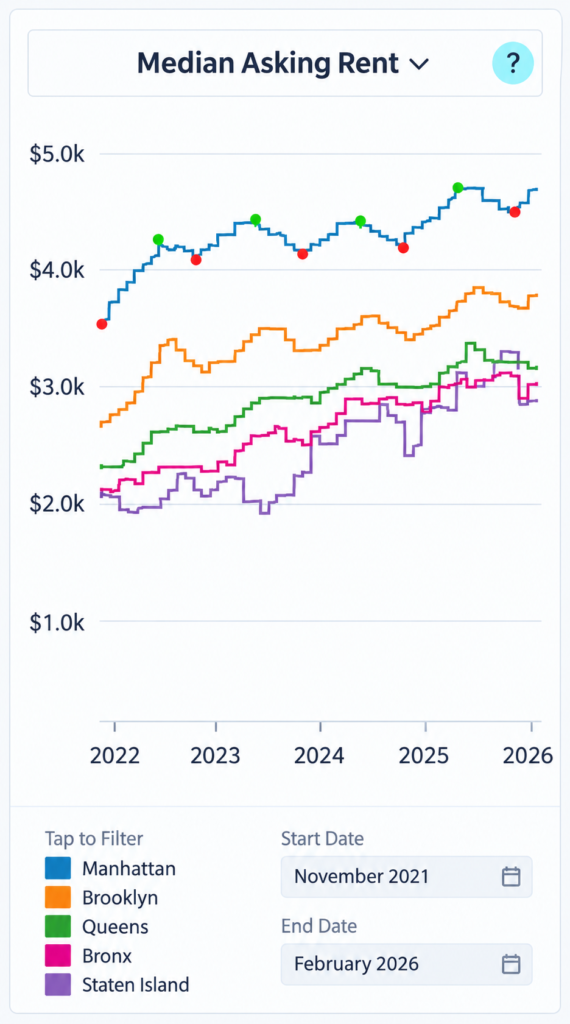
Rental demand in New York City tends to vary by season. The median asking rent chart accompanying this analysis tracks rental trends across Manhattan, Brooklyn, Queens, the Bronx, and Staten Island from November 2021 through February 2026.
Brent Seberhagen’s analysis highlights the potential difference between November and June rents in recent years:
- 2023: $250 per month, or $3,000 annually — a 6.1% difference.
- 2024: $245 per month, or $2,940 annually — a 5.9% difference.
- 2025: $497 per month, or $5,964 annually — a 10.6% difference.
These figures illustrate why lease timing deserves attention. The potential difference can affect a tenant’s housing budget and a landlord’s rental income. Actual rents vary by neighborhood, property type, apartment condition, and market conditions.
Tips for NYC Renters: Think Strategically About Your Lease
If your lease begins in June, consider whether a longer lease term could help shift your next renewal into a different season.
For example, a 1.5-year lease may move a summer lease expiration into winter, when rental conditions may be more favorable for some tenants. The best approach depends on your housing needs, the landlord’s terms, and the availability of suitable apartments.
Before signing, consider:
- Comparing asking rents for similar apartments across neighborhoods.
- Reviewing the total cost of the lease, not just the monthly rent.
- Asking whether the landlord will consider a different lease term.
- Checking the renewal terms and any applicable rent regulations.
- Planning ahead so you have time to compare available options.
Seasonal patterns are useful guides, but they do not guarantee that every apartment will be less expensive in winter.
Tips for NYC Landlords: Consider Lease Expiration Dates
For landlords, lease expiration dates can influence when a property returns to the rental market and how much competition it faces.
Brent suggests that landlords consider extending leases signed during winter so they expire approximately 18 months later in spring. This may position the next leasing period closer to a season with stronger rental demand.
Before making a change, landlords should evaluate tenant retention, vacancy risk, operating costs, local rental regulations, and the potential costs of turnover. A higher asking rent does not necessarily translate into higher net income if a property remains vacant.
Can Lease Timing Affect Investment Property Value?
Rental income is one factor that can influence the value of an investment property. For income-producing real estate, investors may use the capitalization rate, or cap rate, to evaluate a property’s income relative to its value.
In simplified terms:
Property value = Net operating income ÷ Capitalization rate
A property’s net operating income may improve when rental income increases, provided expenses and vacancy losses do not rise enough to offset the gain. Because valuation often depends on both income and the market’s capitalization rate, changes in rent alone do not guarantee a particular increase in property value.
Brent’s analysis suggests that strategically aligning lease expirations with stronger rental seasons could potentially improve portfolio value. The estimated 3%–10% increase mentioned in his original post should be treated as an illustrative estimate, not a guaranteed result; actual outcomes depend on the property’s financial performance, expenses, market conditions, and valuation assumptions.
For owners considering a sale or refinancing, reviewing lease terms and income records with qualified real estate and financial professionals can help identify opportunities and risks.
Make Your Next NYC Real Estate Move With a Plan
Whether you are renting an apartment, managing a rental property, or evaluating an investment, understanding seasonal rental trends can help you make more informed decisions.
Candis Lai and Brent Seberhagen work with clients across New York City’s real estate market. Reach out to discuss rental timing, investment property strategy, or your next real estate move.
Contact Candis Lai
Phone: 917-524-9678
Email: Candis@bhhsnyp.com
Contact Brent Seberhagen
Phone: 917-409-8268
Email: Brent@bhhsnyp.com
This article is for general informational purposes only and is not financial, legal, or investment advice. Rental market conditions and property valuations vary. Consult qualified professionals regarding your specific circumstances.